

The Power Structures That Live in the Nervous System I
How the power structures we move through come to live inside us — fiction and essay, Part I.

I hate myself — she heard the mutter at the top of her mind. Where did it come from? Every once in a while she had these intrusive thoughts, nowhere close to what she consciously felt or thought.
What was it?
She wondered if she was picking up the thoughts of others, if it was some form of self-hate deep in her psyche, or something else — something far darker than she wanted to imagine.
She pressed pause and set her phone aside and jumped back into the brief she was writing.
Life had been weird lately, serendipitous in a lot of ways — she was learning to see the good in it, and to let it in.
Then there were these dark moments that made her question it all.
The phone rang. “Taryn,” a familiar voice said as she answered.
“Taryn,” the voice repeated.
“Yes,” she answered, with curiosity and play. It was her baby brother. He was always rushing, never giving people time to respond.
“I thought you’d be here by now. I told you, Mommy needed us.”
He was well into his thirties and still called their mother Mommy. Taryn rarely called her at all.
“I’m not coming,” she said.
“You’re not coming? But Mommy said she wanted us all here.”
“Okay.”
“Okay? So you’re not— she’s going to be pissed.”
Taryn lowered the phone to her chest and took a deep breath.
I hate myself became I hate you became I hate her — an old loop she no longer wanted to play.
She still wasn’t sure of the source, but she knew it hadn’t begun with her. Yet she was convicted it would end here.
She thought of the podcast she recently pressed play on — it was about the ivory-tower-to-corporate-America pipeline and how it trained a lineage of women to give away their power in exchange for reward.
What that reward was, exactly, the piece never quite settled — the money, the perceived status, the sense of belonging that came with being in? Or maybe of being different, somehow: one of the ones who made it.
It drew on interviews with countless women from all over the country — ages twenty-five to sixty-five, every kind of socioeconomic background — all of them, however, college-educated, each from what would be deemed a top-ten school in her field.
One would assume the education thread meant similar circumstances. It didn’t. They all carried the same pipeline somewhere in their story, but their paths through it were wide and varied.
One woman — a corporate consultant, a top-three degree in her field — had been asked to think about the institutions: the big firm, the Ivy League, the consulting rooms, the boardrooms.
What had those power structures trained her to do with her intelligence, her ambition, her creative instincts?
Her words rang in Taryn’s head:
“They trained me to give away my intelligence and ambition for a relatively low price, and to use my creative instincts to hold them up and feed them. They rewarded me for overriding my own desires. They rewarded my rushing, my overgiving. They punished me for taking my time, for breathing, for enjoying myself — for letting things emerge on their own, for speaking my truth, for using my creativity and energy and focus on me.”
“It was never outright, she continued. “It was covert, subtle — in the small daily actions, the conversations, the energetic impulses. I learned to hide what I wanted — my deepest desires — even from myself.”
Even from myself. The words reverberated in Taryn’s mind.
What was she hiding?
She lifted the phone back to her ear and sent her love instead of folding.
“Alright,” said her brother, and they hung up.
She couldn’t shake the feeling that the power structures had been internalized — built into nervous systems, into culture, into the conditioning handed to little girls (and maybe boys too), from a very young age.
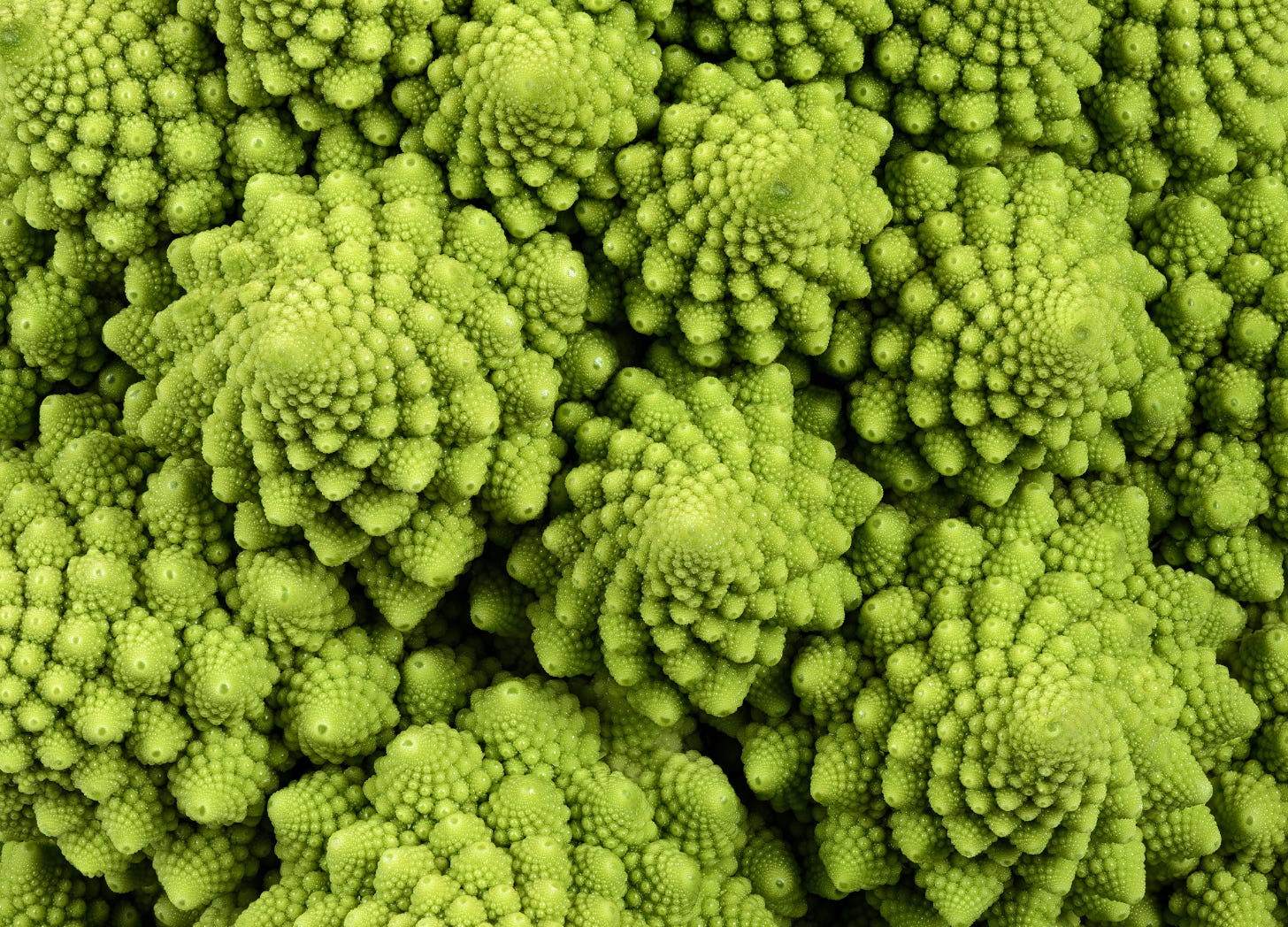
When I consider the power structures we move through and carry, I am reminded of cauliflower and its fractal nature.
Keep reading with a 7-day free trial
Subscribe to The Nerve by Tiffany Crawford to keep reading this post and get 7 days of free access to the full post archives.